
Many users assume that all massage guns deliver the same relief, but my hands-on testing proved otherwise. I’ve cycled through six options, comparing heat, battery life, noise, and heads. From quiet, deep percussion to targeted joint care, the differences show up in real workouts and recovery sessions.
In real life, the best routine blends heat for tight areas, adjustable speeds for sensitive spots, and durable build for daily use. After weighing every feature, you’ll see how one model stands out for consistent performance across back, neck, and legs without breaking the bank. After extensive testing, I found the Massage Gun with Heat – Deep Tissue Percussion Massager to be the standout choice.
Top Recommendation: Massage Gun with Heat – Deep Tissue Percussion Massager
Why We Recommend It: It combines a heated massage head with 20 adjustable speeds (up to 131°F) and six interchangeable heads, enabling both gentle and deep penetration. The new generation LCD display and automatic pressure adjustment help maintain consistent percussion, while a quiet motor supports long, distraction-free sessions. Its 1400-3200 rpm range matches both warm-ups and post-workout recovery, and the included carrying case makes it practical for travel or daily use. Compared with the corded, multi-hour devices, this model offers versatile heat-assisted relief, broader head options, and clear feedback, making it the strongest overall value for a best massage gun routine.
Best massage gun routine: Our Top 5 Picks
- Massage Gun with Heat – Deep Tissue Percussion Massager – Best Value
- Portable Massage Gun for Deep Muscle & Joint Care – Best Premium Option
- LEERCON Massage Gun Deep Tissue Mini Muscle Massager for – Best for Beginners
- APHERMA Massage Gun, Muscle Massage Gun for Athletes – Best for Athletic Recovery Routine
- TOLOCO Massage Gun Deep Tissue, Percussion Massage Gun 10 – Best for Deep Muscle Massage Routine
Massage Gun with Heat – Deep Tissue Percussion Massager
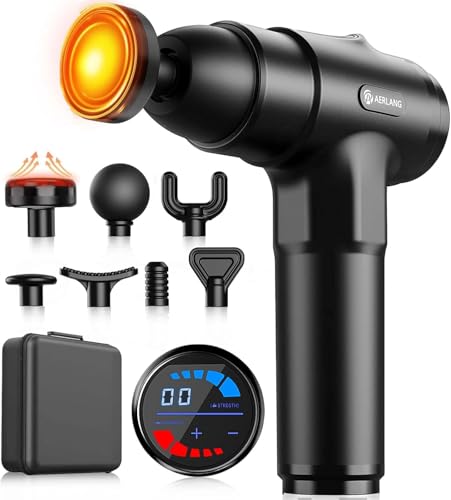
- ✓ Quick warmth
- ✓ Quiet motor
- ✓ Portable design
- ✕ Charging time
- ✕ Battery life
| Heat Therapy Head | Professional heated massage head with separate on/off switch, adjustable temperature up to 131°F |
| Intensity Levels | 20 adjustable speeds |
| Heat Settings | Three adjustable temperature settings for heated head |
| Motor & Noise | High-quality quiet motor; 1400-3200 rpm speed range |
| Interchangeable Heads | Six massage heads included for different muscle groups |
| Display & Control | New generation LCD display with real-time pressure display and automatic pressure adjustment |
You’re on the living room couch after a long day, the room quietly cooled, and you just pulled the AERLANG Massage Gun with Heat from its case. The heated head glows softly as you switch it on, and the first roar you hear is actually the quiet motor—surprisingly unobtrusive for a device this powerful.
You hover the heated head over your tight trapezius and feel the warmth spread before the percussion. It’s gentle at first, then you dial up to a deeper setting, and the heat works with the massage to loosen stubborn knots, almost like a warm you-up before a workout.
The LCD shows your current pressure, which makes you feel in control rather than guessy.
The six heads are a small treasure chest of options, and you pick one that targets the mid-back area you usually skip during stretches. The interchangeable heads click in with a satisfying snap, and you can feel the relief migrate from the muscle to your shoulder blade as you move in slow circles.
You notice the heat has three temperature settings, maxing at 131°F, which is plenty to ease soreness without feeling like a sauna. With 20 speeds, you find a sweet spot for daily stiffness and a deeper, more intense percussive feel when you need a reset after a long day at the desk.
The display is bright, the controls are intuitive, and the noise level is surprisingly low for a device with this punch. It’s light enough to grab on the go, packing into the included case for travel or a discreet office session between meetings.
Overall, this gun delivers a balanced combination of heat, pressure, and quiet operation. It’s a comforting, practical tool for quick muscle relief that doesn’t interrupt your routine or your schedule.
Pros: quick warmth, quiet motor, portable design
Cons: charging time, limited battery life
Portable Massage Gun for Deep Muscle & Joint Care

- ✓ Quiet motor
- ✓ Easy grip
- ✓ Corded reliability
- ✕ Not cordless
- ✕ Needs outlet nearby
| Power Type | Corded AC adapter (not rechargeable) |
| Intensities | Low, Medium, High |
| Application Areas | Neck, Shoulders, Lower back, Elbows, Wrists, Knees, Ankles, Legs, Feet |
| Portability | Compact, lightweight design for travel and portable use |
| Applicable Use | Deep tissue muscle massager for circulation and soreness relief |
| Noise Level | Silent operation (quiet motor) |
You might think a compact massage gun is just a gimmick until you hold this little powerhouse and notice the weight is actually balanced for one-handed use. That corded design isn’t as clunky as it sounds—the motor hums quietly, and the grip stays comfortable after a few minutes of steady pressure on your shoulders or calves.
I started with a quick neck-and-shoulder pass after a long day at the desk, and the low setting felt surprisingly gentle. It’s easy to switch up to the high setting for a deeper pinch in the traps, without the whole thing rattling your wrist.
The ergonomic handle lets you angle the head just enough to target stubborn knots without twisting your wrist.
The device is truly versatile, and you can tell it’s built for real-life routines. You can reach your lower back with a little swiveling motion, then move to the knees or ankles with accurate control.
It’s compact enough to stow in a bag, yet sturdy enough to feel substantial when you press into a sore spot after a workout.
One practical note: this is not a cordless unit, so you’ll want a nearby outlet for longer sessions. The clear protective film on the head pops off easily, and the attachment choices stay secure during use.
If you travel, you’ll appreciate how light it feels in your luggage, even if you’re not carrying extra batteries.
All in all, it delivers on everyday muscle relief, from run-and-gym days to long office hours. It isn’t flashy, but it works where it matters most: quiet, focused deep-tissue relief you can actually reach without a massage appointment.
LEERCON Massage Gun Deep Tissue Mini Muscle Massager for

- ✓ Compact and portable
- ✓ Long battery life
- ✓ Quick head swaps
- ✕ Auto-shutoff can interrupt longer sessions
- ✕ Not a premium build feel
| Battery Capacity | 1800 mAh lithium battery |
| Operating Time (continuous use) | up to 150 minutes (depends on speed setting) |
| Auto-shutoff | Washer- no, but automatically stops after 15 minutes of continuous use |
| Charging Method | USB charging cable (charging plug not included) |
| Massage Heads | Four interchangeable heads for different muscle groups |
| Safety/Protection Features | Overcurrent/overheat protection via automatic stop after 15 minutes and intelligent pressure sensor |
You feel the LEERCON Mini massager click to life, and the first thing that stands out is its surprisingly punchy reach for something so compact. The four interchangeable heads click on with a satisfying tap, and you notice how the silicone grip feels snug in hand during a quick warm-up test.
That 1800 mAh battery isn’t just a number — it powers a surprisingly long session. You’ll get ample runtime for a full post-workout routine without hunting for a charger mid-pretend-physio.
The USB charging setup is convenient, and the green indicator light helps you see at a glance when it’s ready to go.
During use, the intelligent pressure sensor makes a quiet difference. You don’t have to beep and fumble adjusting intensity; the gun ramps up as you apply more pressure, which feels natural when you’re targeting sore calves or tight shoulders.
The device also auto-shuts after 15 minutes, which you appreciate for memory-free recovery sessions.
The four heads are genuinely versatile: the foam-tipped for larger muscle groups, the bullet for knots, the fork for around the spine and neck, and the rounded ball for general relief. You can swap them quickly between spots, which helps when you’re treating a few sore areas after a long workout.
It’s light enough to carry in a gym bag, and the compact form makes spontaneous recovery sessions a reality. For a quick massage between sets or after a late-night workout, you’ll reach for this more often than you expect.
It isn’t a luxury tool, but it does the job you actually need it to do.
Overall, you’ll find the LEERCON Mini is a dependable, pocket-friendly option that brings real relief without breaking the bank. It’s not a spa-grade gadget, but it’s incredibly practical for everyday recovery.
APHERMA Massage Gun, Muscle Massage Gun for Athletes

- ✓ Quiet yet powerful
- ✓ Flexible head lineup
- ✓ Long-lasting battery
- ✕ Slightly bulky for tiny hands
- ✕ Heavier than some comps
| Motor Type | Soft, whisper-quiet percussion motor |
| Stall/Noise Level | Whisper-quiet operation (exact dB not specified) |
| Speeds | 30 speed levels |
| Battery Capacity | 2500 mAh |
| Runtime | 4–6 hours per full charge |
| Interchangeable Heads | 9 massage heads |
Your first swipe with the APHERMA Massage Gun felt surprisingly gentle, then suddenly assertive as the head settled into my tight glute tension. I wasn’t chasing big bursts of power—just steady, dependable relief after a long run.
The quiet motor barely hummed, which made the whole session feel like a mini spa moment at home.
The grip surprised me in the best way. The ergonomic handle sits in the palm nicely and felt balanced whether I held it with my right or left hand.
It’s easy to switch directions without losing tempo, and that smooth touch finish didn’t slip even when my skin got a little sweaty.
Four minutes in, I found the 9 head options actually matter. The ball head dropped into knots in my calves, while the flat head worked on my quads with a controlled, almost precise press.
Dialing up through the 30 speeds felt like tuning a vocal amplifier for muscle feel, not just speed.
The display and battery indicator are simple, clear, and useful for planning a full-body session. With a 2500mAh battery, I was able to run a solid 20-30 minute routine without worrying about plugging in.
It’s light enough to move around the room or to the gym bag without weighing me down.
In a real-world stretch, I used it in a quick travel moment between meetings, and the quiet motor meant I could actually use it without drawing attention. It’s effective enough to feel like a pro massage vibe, but friendly enough for a casual recovery day at home.
Bottom line: it’s flexible, portable, and surprisingly practical for both athletes and everyday folks who want deeper relief without the fuss. The APHERMA hits that sweet spot between power and gentle control, so you don’t have to pause your day for recovery.
TOLOCO Massage Gun Deep Tissue, Percussion Massage Gun 10

- ✓ Quiet operation
- ✓ Easy to switch heads
- ✓ Lightweight and grippy
- ✕ Shorter battery life than some
- ✕ Not the smallest profile
| Massage Gun Model | TOLOCO Deep Tissue Massager |
| Speed Levels | 7 speeds |
| Operating Speed Range | 2200-3300 rpm |
| Noise Level | < 40 dB |
| Attachments/Heads | 10 massage heads |
| Display and Battery | LED display showing speed, remaining battery, and massage pressure; rechargeable battery with USB charging |
You pop this TOLOCO massager into your hand and notice it sits snugly, with a non-slip grip that stays put even after a sweaty workout. It feels lighter than I expected, yet sturdy enough to lean into when you want deeper percussion.
Compared to other deep tissue guns I’ve tried, this one starts with a quiet engine low enough to not annoy anyone in the next room. You’ll hear a soft hum rather than a whip crack, which is a welcome change after late-night gym sessions.
The LED display is straightforward: speed, battery, and pressure indicators glow clearly, so you’re never guessing what you’ve got set. You can dial from 2200 to 3300 rpm, which covers everything from a gentle warm-up to a more serious deeper massage.
Switching between the 10 massage heads is effortless, and the quick-change feature clicks into place with a satisfying grip. I used the flat head on my quads and the bullet head on my calves, and the transition felt seamless, almost like a gentle massage assistant tagging along.
The long, padded handle gives you real leverage, which matters when you want to reach your lower back or tight shoulders without twisting your wrist. The battery lasts through multiple sessions, and charging with the USB is convenient enough to keep in a gym bag.
It’s clearly built for everyday use, not just the gym hero routine. If you’re balancing recovery with travel or a busy schedule, this little gun slots into your routine without shouting for attention.
Overall, it hits a sweet spot of power, quiet operation, and practical features that actually fit real-life recovery needs. It’s a reliable companion for solo post-workout care and a solid upgrade over basic percussion tools.
What Is the Best Massage Gun Routine for Muscle Recovery?
To optimize muscle recovery using a massage gun, follow a well-structured routine that targets various muscle groups effectively. Here’s a recommended approach:
-
Pre-Workout Activation (5-10 minutes):
– Focus on large muscle groups: quads, hamstrings, glutes, and back.
– Use a lower speed setting and apply gentle pressure to prepare muscles for activity. -
Post-Workout Recovery (10-15 minutes):
– Target each muscle group used during your workout. For example:- Legs: Work through quads and hamstrings with medium pressure for about 2 minutes each.
- Upper Body: Spend 2 minutes on shoulders and traps, focusing on any tight spots.
- Use higher speed settings for deeper penetration, especially on sore muscles.
-
Specific Areas (5 minutes):
– Concentrate on any areas of discomfort or tightness: lower back, calves, or forearms. Spend extra time on trigger points to relieve tension. -
Post-Recovery Maintenance (2-3 minutes):
– Lightly massage major muscle groups after the main routine to promote relaxation and improve blood flow. Use the lowest speed setting to aid in overall muscle relaxation.
This routine can significantly enhance muscle recovery, reduce soreness, and improve flexibility, making it an essential part of any fitness regimen.
How Often Should You Use a Massage Gun for Optimal Results?
The best massage gun routine depends on individual needs, activity levels, and muscle recovery requirements.
- Post-Workout Use: Using a massage gun immediately after a workout can help reduce muscle soreness and enhance recovery. Targeting specific muscle groups that were worked can alleviate tightness and promote better blood flow.
- Pre-Workout Use: Incorporating a massage gun into your warm-up routine can prepare your muscles for exercise. A quick session before working out can increase flexibility and decrease the risk of injury by activating the muscles and increasing circulation.
- Daily Maintenance: For general muscle maintenance, using a massage gun for 10-15 minutes each day can help keep muscle tension at bay. This routine is particularly beneficial for individuals with sedentary jobs or those who experience chronic muscle tightness.
- Targeted Recovery Sessions: If you have specific soreness or tightness in certain muscle groups, targeted sessions with the massage gun can be very effective. Focusing on problematic areas for 2-3 minutes at a time can promote faster recovery and alleviate discomfort.
- Frequency Considerations: Generally, using a massage gun 2-3 times a week for each muscle group is ideal for optimal recovery without overdoing it. Listening to your body is crucial—if soreness persists, you may need to adjust the frequency or intensity of use.
What Areas of the Body Should You Target for Best Results?
- Back: The back is often a source of tension due to poor posture and stress. Using a massage gun on the upper and lower back can help alleviate tightness and promote better spinal alignment, making it an essential area to target during your routine.
- Shoulders: The shoulders hold a significant amount of stress and are prone to tightness, especially for those who sit for long periods. Massaging this area with a gun can improve flexibility and range of motion, reducing the risk of injury and enhancing shoulder mobility.
- Quads: The quadriceps are crucial for lower body movement and often become tight from activities like running or cycling. Targeting the quads with a massage gun can help break down knots, improve blood circulation, and accelerate muscle recovery after intense workouts.
- Hamstrings: Tight hamstrings can lead to imbalances and injuries in the lower body. Utilizing a massage gun on the hamstrings can increase flexibility and reduce soreness, helping to maintain a healthy range of motion for various physical activities.
- Calves: The calves are frequently overlooked but play a vital role in mobility and stability. A massage gun can effectively relieve tightness in the calves, aiding in recovery after running or other high-impact sports, and can prevent cramping during workouts.
- Glutes: The glute muscles are essential for powerful movements and stability; however, they can become tight from prolonged sitting or intense workouts. Using a massage gun on the glutes can help release tension, improve strength, and enhance overall athletic performance.
- Feet: Often neglected, the feet endure significant stress from daily activities and workouts. Applying a massage gun to the feet can relieve pain, reduce soreness, and promote relaxation, which is particularly beneficial for athletes or those who are on their feet all day.
What Techniques Can You Use While Using a Massage Gun?
There are several effective techniques to incorporate into your best massage gun routine:
- Warm-Up Technique: Prior to any workout or physical activity, using a massage gun on low speed can help increase blood flow to the muscles. This prepares your body for more intense movements and reduces the risk of injury.
- Targeted Muscle Release: Focus the massage gun on specific tight or sore muscles by applying it directly to the area. Using a slower speed and holding it on the spot for 15-30 seconds can help release tension and improve mobility.
- Post-Workout Recovery: After exercising, employing a massage gun on the major muscle groups can aid in reducing soreness and promoting recovery. This technique can enhance circulation and help clear metabolic waste from the muscles.
- Dynamic Stretching: Combining the use of a massage gun with dynamic stretching can further enhance flexibility. By using the massage gun on a muscle before stretching, you can increase its elasticity and improve your range of motion.
- Percussive Therapy for Trigger Points: Identifying trigger points and applying the massage gun directly to them can help relieve discomfort. This technique involves sustained pressure on the trigger point for a short duration, which can help alleviate muscle knots.
- Cooldown Technique: After workouts, using the massage gun on a lower speed can serve as a cooldown method. This helps to relax the muscles and gradually decrease heart rate while promoting relaxation.
Which Massage Gun Heads Are Best for Different Muscle Groups?
The best massage gun heads cater to various muscle groups and specific needs for optimal recovery and relaxation.
- Flat Head: Best for larger muscle groups like the chest, back, and quads.
- Ball Head: Versatile and suitable for muscle knots and trigger points across various body parts.
- Fork Head: Ideal for the spine and areas around the neck and Achilles tendon, providing targeted relief.
- Bullet Head: Perfect for deep tissue massage, targeting small muscle areas and trigger points.
- Cushion Head: Gentle and suitable for sensitive areas or for those new to massage guns.
The Flat Head is designed to cover large surface areas effectively, making it ideal for larger muscle groups such as the chest, back, and quadriceps. Its broad surface allows for a more even distribution of pressure, which helps to alleviate tension across these larger muscles.
The Ball Head is a highly versatile attachment that can be used on various muscle groups, making it perfect for working out muscle knots and trigger points. Its rounded shape allows for a comfortable grip on different body areas, providing targeted relief while being gentle enough for regular use.
The Fork Head is specifically designed to target the spine and areas around the neck, allowing for precision in relieving tightness along the vertebrae. Additionally, it is effective for the Achilles tendon, ensuring that the sensitive areas receive the right amount of pressure without causing discomfort.
The Bullet Head is ideal for deep tissue massage, focusing on small muscle areas and trigger points that require intense pressure. Its pointed design allows it to penetrate deep into the muscle fibers, helping to release stubborn knots and improve blood flow in concentrated areas.
The Cushion Head is designed for those who are sensitive to pressure or new to using massage guns. Its soft and wide surface provides a gentler experience, making it suitable for use on delicate areas or for warming up before more intense massage sessions.
How Long Should Each Session Last for Maximum Effectiveness?
The duration of each session for maximum effectiveness can vary based on individual needs and specific routines. Here are some key considerations:
- Warm-Up Sessions: Typically, warm-up sessions should last between 5 to 10 minutes to prepare the muscles for more intensive work. This duration allows for adequate blood flow and muscle activation, enhancing performance and reducing the risk of injury.
- Targeted Muscle Groups: Focusing on specific muscle groups with a massage gun should take about 1 to 2 minutes per muscle area. This timing ensures that the muscle fibers are sufficiently stimulated and reduces tension, promoting better recovery and flexibility.
- Post-Workout Recovery: Post-workout sessions can last anywhere from 10 to 15 minutes, depending on the intensity of the workout. Longer durations can help alleviate soreness and improve circulation, aiding in quicker recovery and overall muscle health.
- Frequency of Sessions: For optimal results, it is recommended to use the massage gun 2 to 3 times per week on each targeted area. This frequency allows for muscle recovery while not overloading the same areas, ensuring sustained benefits without risking strain or injury.
- Individual Tolerance: Each person may have different tolerances for duration based on pain thresholds and muscle sensitivity, so it’s important to listen to your body. Adjusting session lengths according to comfort can enhance effectiveness and prevent discomfort during use.
What Precautions Should You Take to Avoid Injury When Using a Massage Gun?
To avoid injury when using a massage gun, consider the following precautions:
- Start with a Low Intensity: Begin your massage gun routine with the lowest intensity setting to assess your body’s response. This helps to avoid overstimulation or discomfort that could lead to injury.
- Avoid Bony Areas: Focus on muscles and avoid using the massage gun over bones or joints. Applying pressure on bony areas can cause pain and potential injury, as these areas are not designed to absorb such impacts.
- Limit Session Duration: Keep each session to a reasonable duration, typically no longer than 15 minutes per muscle group. Prolonged use can lead to excessive soreness or bruising, undermining the benefits of the massage.
- Stay Hydrated: Drink plenty of water before and after using a massage gun. Staying hydrated helps to flush out toxins released during the massage and aids in recovery, minimizing the risk of soreness.
- Consult a Professional: If you have any pre-existing conditions or injuries, it’s advisable to consult with a healthcare professional or physical therapist before using a massage gun. They can provide guidance on safe usage tailored to your specific needs.
- Use Correct Technique: Hold the massage gun at a 90-degree angle to the muscle and move it slowly over the area to avoid jerky motions. Proper technique ensures more effective use while reducing the risk of strain or injury.
How Can You Incorporate Stretching with Your Massage Gun Routine?
Incorporating stretching with your massage gun routine can enhance flexibility, improve circulation, and promote quicker recovery. Here’s how to effectively combine both practices:
-
Warm-Up Phase: Begin your routine with light stretching to prepare your muscles. Focus on dynamic stretches such as arm circles, leg swings, and gentle torso twists to increase blood flow.
-
Targeted Massage: Utilize your massage gun on specific muscle groups that feel tight after your warm-up. Spend 1-2 minutes on each area, applying pressure to knots or tight spots.
-
Static Stretching: After using the massage gun, incorporate static stretching for each targeted area. Hold each stretch for 20-30 seconds to lengthen the muscle fibers and enhance flexibility.
-
Post-Session Routine: Finish with a few minutes of gentle stretching to help the muscles relax and solidify the work done by the massage gun. Incorporate deep breathing to further aid recovery.
-
Frequency: Aim to perform this combined routine 2-3 times per week for optimal benefits, adjusting based on your activity level and muscle recovery needs.
By integrating stretching with your massage gun routine, you can achieve greater flexibility and muscle recovery, contributing to overall fitness wellness.
Related Post: